
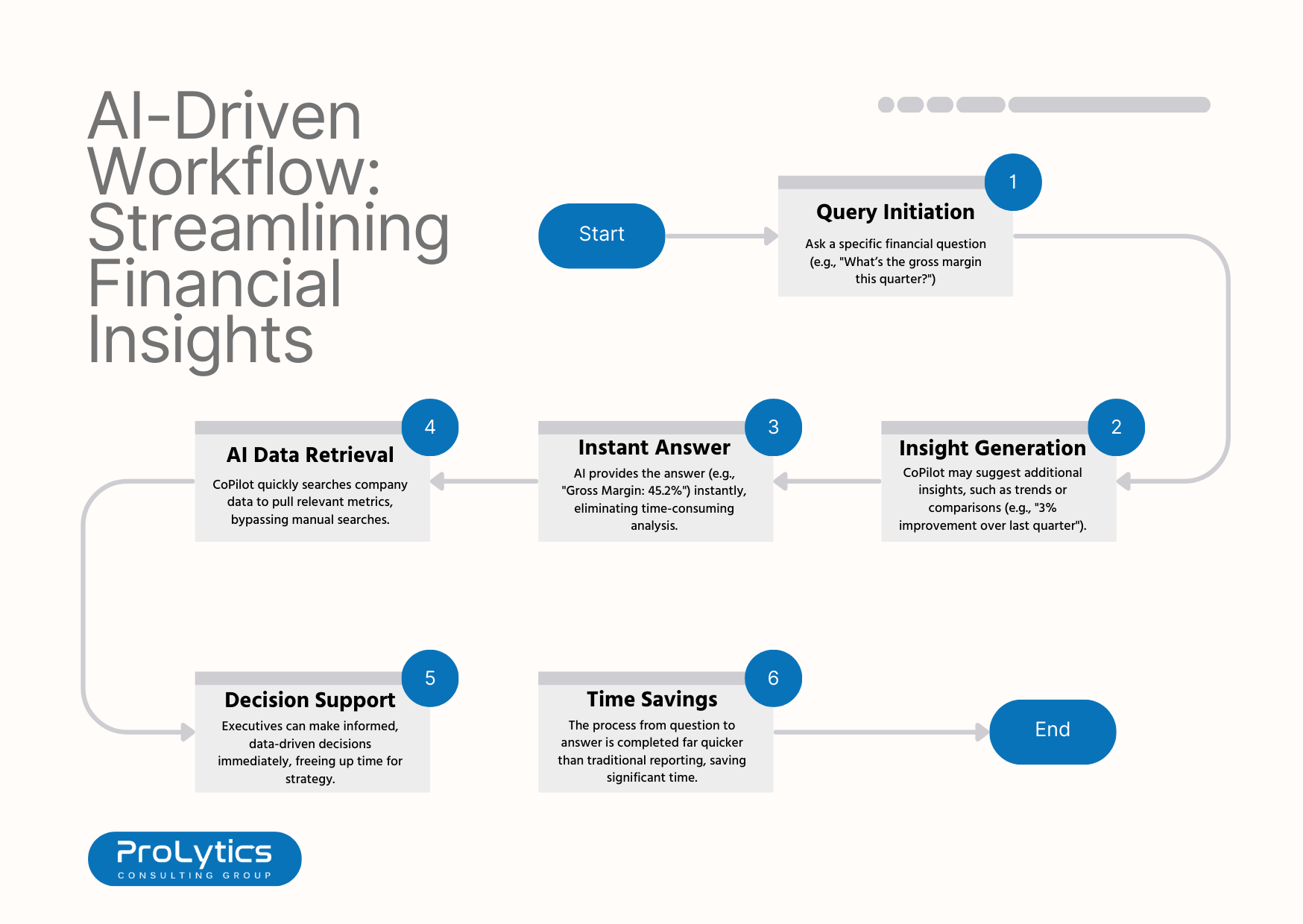
Have you ever struggled with the complexity of creating financial reports or found it difficult to analyze data scattered across different tools and systems? These challenges are common in many organizations and often lead to inefficiencies, delays, and missed opportunities for insights. The good news is that technology, particularly tools like AI-enabled interfaces such as Copilot, is transforming how finance teams handle reporting and data analysis. By leveraging automation, AI-driven insights, and seamless integrations with platforms like Power BI, finance teams can streamline processes, collaborate effectively, and make quicker, more informed decisions.

In this interview, Anzyl Chakravarty, Technical Project Manager at ProLytics Consulting Group, shares how these advanced tools are reshaping financial workflows and boosting reporting efficiency.
Q: Anzyl, let’s start with Vena’s Copilot feature. How does it support users in creating reports and analyzing data, and can you provide an example of how it has improved your team’s workflow?
Anzyl Chakravarty:
Vena’s Copilot feature is like a smart assistant, helping users create reports and analyze financial data intuitively and efficiently. It automates tasks, provides contextual recommendations, and supports real-time collaboration, simplifying financial reporting and analysis.
Here are some key improvements:
- Guided Report Creation: Copilot streamlines reporting by offering step-by-step guidance, suggesting relevant metrics based on the data. This saves time and ensures reports are comprehensive and accurate.
- Enhanced Collaboration: Copilot enables real-time collaboration, allowing stakeholders to work on shared reports seamlessly, reducing back-and-forth communication and ensuring everyone works with the latest data.
- Faster Insights: It automatically analyzes data, highlights key insights, and summarizes past outcomes, freeing up teams to focus on strategic decision-making.
By automating repetitive tasks and promoting collaboration, Copilot has significantly improved workflow efficiency and reporting accuracy.
Data Visualizations & Power BI
Q: Moving on to Power BI—how has integrating Power BI with Vena benefited your organization’s data visualization and reporting processes? What key benefits have you seen from this integration?
Anzyl Chakravarty:
Integrating Power BI with Vena has been a massive leap forward for data visualization and reporting. Power BI is known for its powerful visual capabilities, and when you combine it with Vena’s comprehensive financial data management, the result is a robust, real-time dashboard that empowers decision-makers to view and interact with their data like never before.

Here’s what we’ve seen from the integration:
Dynamic Data Visualizations: With Power BI, financial teams can now create highly interactive and visually appealing reports that allow users to drill down into specific areas of interest. For example, instead of just receiving a static financial statement, a department head can now use Power BI’s interactive dashboards to view KPIs in real time and see how they are trending over time. This has made financial data more accessible and easier to digest for everyone—whether they’re in the finance department or other business areas.
Custom Dashboards: The integration enables us to build customized dashboards that can track specific metrics important to each department. A client in the retail industry, for example, used the integration to track sales performance alongside operational costs, profit margins, and inventory turnover. This gave them a clearer picture of how their financials were impacting day-to-day operations.
Real-Time Data Sync: Power BI pulls data directly from Vena, meaning any update made in the system automatically reflects in Power BI’s visualizations. This ensures that everyone is working off the most up-to-date information. For a global client managing multiple regional offices, this real-time data synchronization was critical for understanding financial performance across regions and taking timely action to address variances.
Ease of Use: One of the big benefits of this integration is that non-technical users—including managers and executives—can easily interact with the data without needing to understand complex formulas or systems. The ease of navigating Power BI’s visuals allows everyone to focus on insights rather than getting bogged down by the mechanics of reporting.
In short, Power BI’s integration with Vena has not only enhanced our data visualization capabilities but also allowed teams to make faster, more informed decisions by providing clear, actionable insights through real-time dashboards.
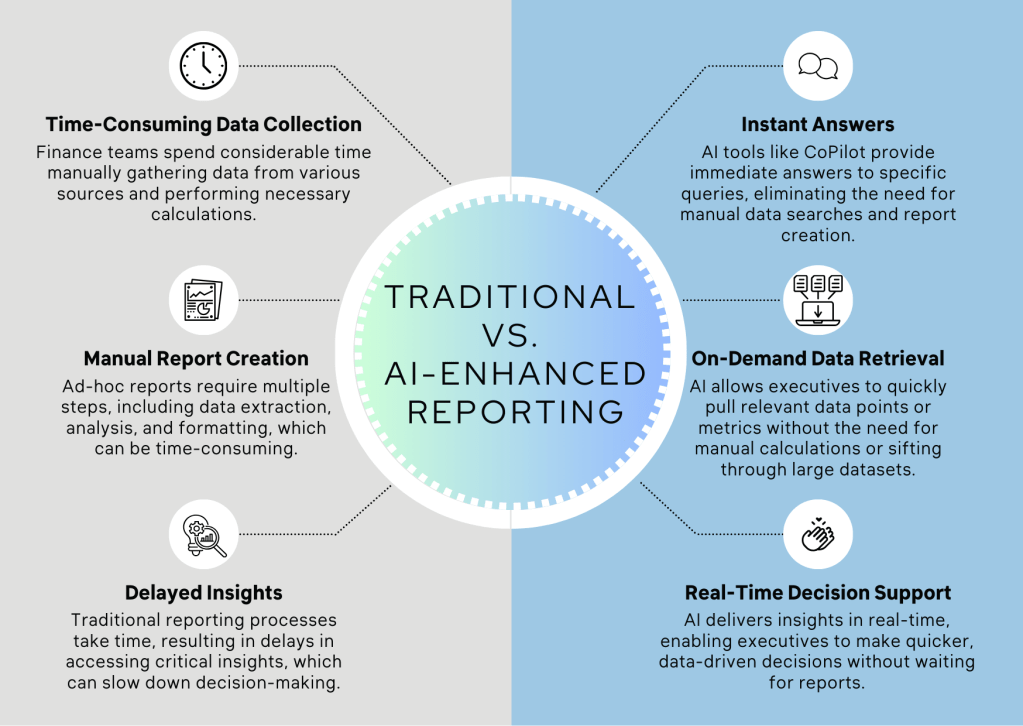
Q: Finally, how have Vena’s AI and Copilot features contributed to maximizing efficiency in your financial reporting processes? What specific time savings have you experienced?
Anzyl Chakravarty:
Vena’s AI and Copilot features have significantly streamlined our financial reporting process by reducing the manual effort required to gather, clean, and analyze data. Let’s break down the specific ways these tools have maximized efficiency:
AI-Driven Data Insights: The AI functionality in Vena is crucial for analyzing large datasets quickly. For example, AI can automatically identify trends, anomalies, and outliers in financial data that may require attention. It can even flag potential errors or discrepancies that might otherwise be missed. This automated analysis reduces the need for manual intervention and helps financial teams spot issues early, saving valuable time.
Time-Saving Automations: In the past, we would spend a lot of time manually consolidating data from various departments and systems. Vena’s AI automates this process, pulling data directly from integrated systems, cleaning it, and preparing it for analysis. For example, when preparing a monthly financial report, AI can automatically pull the latest data from across the organization, organize it, and present it in a consolidated format. This has cut down reporting times by as much as 40-50%.
Faster Reporting Cycles: With the assistance of Copilot, users can quickly generate reports based on data that’s already cleaned and structured by the system. Instead of spending hours formatting and verifying data, Copilot helps users set up reports, perform initial analysis, and automatically suggest areas that need attention, all in a fraction of the time it used to take.
Improved Collaboration: With AI and Copilot working together, teams are able to quickly make decisions based on accurate data. In one project, we saw that AI reduced the time spent on report creation by about 30%, while Copilot helped our team collaborate more efficiently. No more waiting for approvals or chasing down missing data—everything is streamlined and faster.
To give you an example: In a client engagement with a financial services firm, we went from a two-week reporting cycle to just under one week, thanks to the AI-powered automation and Copilot’s real-time collaboration features. This allowed the finance team to allocate more time to strategic initiatives, rather than getting bogged down by routine reporting tasks.
Conclusion: Embracing the Power of AI and Integration in Financial Reporting
As Anzyl emphasized, the combination of AI, Copilot, and Power BI integration within Vena is revolutionizing financial reporting. These tools are enabling organizations to automate routine tasks, gain deeper insights into their data, and collaborate more effectively. The impact is clear: reporting processes are faster, more accurate, and far more strategic.
Organizations that embrace these tools can expect significant time savings, improved decision-making, and enhanced team collaboration. Whether you’re a finance professional or a department head, the ability to interact with data more intuitively and make data-driven decisions faster can set your organization on a path to greater efficiency and success.
If you haven’t yet explored how AI and automation can improve your financial workflows, now is the perfect time to consider these solutions. The future of financial reporting is faster, smarter, and more connected than ever before.
